
Views: 0 Author: Site Editor Publish Time: 2026-09-02 Origin: Site


Hardware failure carries a hidden, often devastating price tag for manufacturers. A compromised fastening component can easily drive up product return rates overnight. It damages your brand reputation and effectively kills repeat business. For technical apparel, luxury leather goods, and heavy-duty gear, simply requesting a basic closure falls short. The actual performance heavily relies on the exact metal alloy chosen. Lifespan, durability, and chemical resistance depend entirely on this specific grade.
Designers frequently misunderstand this crucial detail during the development phase. You cannot treat all metals identically when building rugged products. Selecting the right material grade requires careful, deliberate evaluation. You must balance tensile strength, overall weight, and corrosion resistance against specific end-use requirements. This decision shapes how garments drape, function, and survive tough conditions. We will explore how different alloys perform under intense stress. You will learn to match material densities to fabric weights precisely. This ensures your final product withstands daily wear and severe environmental abuse.
Hardware is frequently treated as an afterthought in garment procurement. Brands often spend months perfecting fabrics but minutes selecting closures. This dangerous imbalance leads directly to severely mismatched materials. For example, placing heavy brass on lightweight silk causes immediate drape issues. Conversely, using fast-oxidizing metals in marine environments guarantees rapid degradation. We see these basic engineering errors across multiple product categories every season.
You must understand the severe financial implications of these material mismatches. Zipper tooth pull-off ruins the functionality of an entire jacket instantly. Slider derailment frustrates end-users and triggers costly warranty claims. Oxidation bleeding ruins expensive fabrics permanently, leaving ugly green or brown stains. These failures lead to immediate product returns and negative reviews. Customers lose trust when structural components fail prematurely on expensive items. A single broken tooth can render a high-end bag completely useless. The resulting damage heavily outweighs the initial component price.
Procurement conversations need a significant, immediate shift in focus. Buyers must move past basic color-matching and shiny aesthetic approvals. The focus must shift toward technical metal zipper specifications. You need to analyze the underlying alloy composition carefully. Tensile strength determines how much force the closure can handle during wear. Plating thickness dictates how long the protective finish will survive daily friction. We recommend establishing strict baselines for these physical metrics. When you define these parameters clearly, product consistency improves dramatically across production runs.
You need to know the specific properties of each common alloy. Different metals serve distinct operational purposes and handle stress differently. We evaluate the four most common material grades below to help guide your selection.
Brass typically consists of a precise copper and zinc alloy blend. It serves as the undisputed heavyweight champion of the fastener industry. The performance profile features incredibly high tensile strength and structural rigidity. It also delivers smooth operating friction over extended periods of time. Brass possesses natural self-lubricating properties at a microscopic level. As you use it, the slider actually glides more freely across the teeth.
This material works best for highly demanding, high-tension applications. We heavily recommend it for raw denim jeans, thick motorcycle jackets, and rugged workwear. The structural integrity easily handles repetitive stress without teeth shifting. However, you must monitor certain inherent risks closely. Brass can oxidize and turn green if left completely untreated. It requires proper chemical treatment or a robust clear-coat layer to survive humidity. Furthermore, it remains relatively heavy compared to synthetic or lighter metal options.
Aluminum components utilize extruded aluminum, often treated through anodic oxidation. Manufacturers anodize these parts to enhance surface hardness and color retention. This specific alloy provides a massive, noticeable weight advantage. It weighs up to 60% less than standard brass counterparts. The performance profile also includes highly effective natural corrosion resistance.
We strongly suggest aluminum for mid-weight outerwear and athletic jackets. It suits lightweight leather goods and activewear perfectly. The reduced mass prevents fabric distortion and sagging on thinner materials. Yet, aluminum carries specific physical limitations you must acknowledge. It has a significantly lower threshold for cross-wise pull strength. The teeth can warp or bend under extreme lateral stress. You should always avoid placing aluminum on high-tension garments or overstuffed bags.
Stainless steel and nickel alloys dominate extreme, punishing conditions. Their performance profile shows exceptional resistance to rust and oxidation. They withstand saltwater exposure and harsh chemical environments effortlessly. These premium alloys will not degrade when exposed to continuous moisture.
This material grade fits marine canvas and military tactical gear perfectly. It represents the absolute ultimate choice for extreme outdoor equipment. The baseline durability outpaces almost every other commercial metal available today. However, strict production constraints do exist for these tough metals. They are notoriously difficult to tool and shape during manufacturing. This rigidness means you get far fewer aesthetic customization options. The manufacturing complexity generally restricts intricate tooth designs and inflates the unit price.
ZAMAK primarily consists of zinc alloyed with aluminum, magnesium, and copper. Manufacturers rarely use it for the actual zipper teeth. Instead, it dominates slider body and puller production globally. The material melts at lower temperatures and is highly moldable. This trait allows for highly detailed custom branding and intricate puller shapes.
Proper surface treatments elevate these zinc components significantly. When electroplated correctly, a zinc-alloy foundation gives the metal zipper aesthetic appeal unparalleled durability. This multi-layer process maintains a luxury finish for years. It resists chipping and scratching under aggressive daily friction. You gain high-end visuals without compromising the mechanical core of the slider.
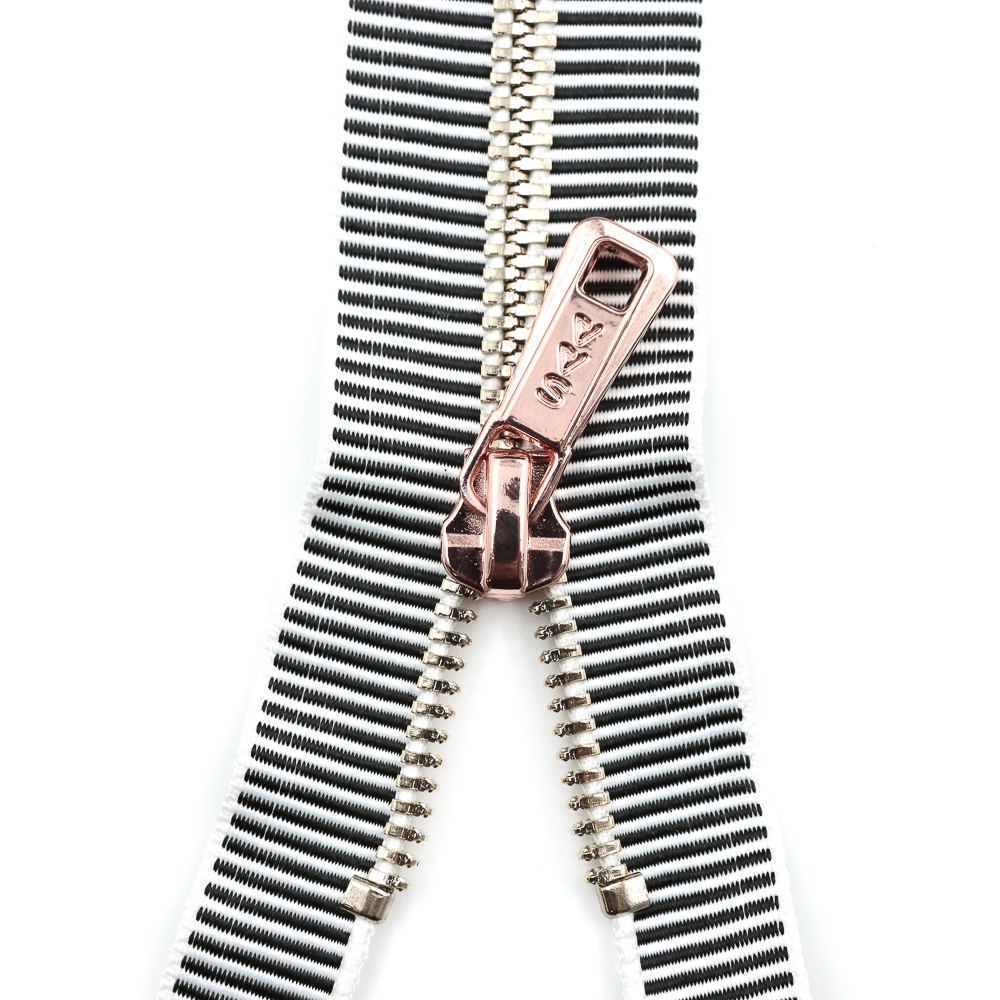
Selecting the correct hardware always involves balancing opposing physical forces. You cannot maximize sheer strength without simultaneously increasing weight. We provide a structured approach below to navigate these complex trade-offs successfully.
Matching hardware weight to fabric density is absolutely critical. You must align the zipper's gauge (size) and material density with the fabric's GSM (grams per square meter). Heavy brass placed on a 100 GSM nylon shell causes immediate sagging. Conversely, a lightweight aluminum coil will fail quickly on 14 oz raw denim.
Material Properties Comparison Chart
| Material Grade | Relative Weight | Lateral Strength | Corrosion Resistance | Best Fabric GSM Match |
|---|---|---|---|---|
| Brass Alloy | Heavy | Very High | Moderate (Requires Coating) | 300+ GSM |
| Aluminum | Light | Moderate | Good (Naturally Resistant) | 150 - 300 GSM |
| Stainless Steel (316L) | Heavy | Exceptional | Excellent | 400+ GSM |
Assessing environmental resilience forms the next crucial step in procurement. You need to know exactly how different grades react to industrial laundering. Enzyme washes easily strip protective coatings from weak metals during manufacturing. High humidity and salt spray destroy unprotected brass rapidly in coastal climates. We highly advise conducting specialized corrosion testing, such as ASTM B117 salt spray tests. Expose your hardware samples to simulated environmental stress before committing to mass production.
Finally, consider the mechanical reality of smoothness and break-in periods. Harder metals behave much differently than softer ones under friction. Stainless steel may feel notably rigid and stiff initially. It requires a dedicated break-in period to achieve optimal fluidity. Brass, being slightly softer and naturally self-lubricating, wears in smoothly over a much shorter timeframe. You should communicate this mechanical break-in expectation to your retail end-users.
Finding the right manufacturing partner mitigates enormous production risks. A reliable metal zipper supplier operates with complete material transparency. They back their structural claims with documented, third-party testing evidence.
Standardized testing validation separates legitimate vendors from careless amateurs. A credible manufacturer should provide comprehensive documentation immediately upon request. We specifically look for strict adherence to ASTM D2061 (Strength Tests for Zippers). This standard rigorously verifies pull-off strength and slider lock resistance. Additionally, request updated OEKO-TEX compliance certificates. This ensures the alloys contain no toxic heavy metals like lead or cadmium. Strict compliance guarantees consumer safety and aligns your brand with global regulations.
We must warn buyers against highly deceptive plating practices. Some factories use cheap, structurally weak base metals to cut costs. They hide these inferior cores under thick, premium-looking electroplating. The plating only dictates the initial aesthetics on the showroom floor. The core material grade dictates the structural integrity entirely. You are buying a metal zipper for its reliable holding power, not just its shine. Always specify the exact base alloy clearly in your official purchase orders.
Prototyping and sampling remain absolutely essential for quality control. You cannot simply assume a zipper will survive your specific manufacturing process. Garment dyeing introduces harsh chemicals and extreme heat. Stone washing subjects the hardware to severe, continuous physical abrasion.
Follow these essential prototyping steps before bulk ordering:
Testing prevents disastrous, brand-damaging bulk ordering mistakes. Never skip the physical validation phase, even on tight deadlines.
There is no single "best" metal alloy for every single application. Performance remains entirely relative to your product's specific use case and environment. Brass confidently wins on raw strength and longevity for heavy textiles. Aluminum claims the absolute victory on weight reduction for lighter athletic garments. Stainless steel dominates in severe corrosion resistance for tactical and marine environments.
Procurement teams must audit their current bill of materials immediately. Review what specific alloys currently sit on your finished garments. Define the non-negotiable environmental stresses your products face daily in the real world. Eliminate any hardware that falls short of those strict demands. Finally, request detailed specification sheets and independent testing data from your shortlisted vendors. Make your material choices based on empirical data rather than visual assumptions.
A: Yes. A smaller gauge in a stronger material (like #5 Brass) can sometimes outperform a larger gauge in a weaker material (like #8 Aluminum), depending on the type of stress applied.
A: Specify anti-oxidation clear coatings or choose inherently corrosion-resistant grades like stainless steel or anodized aluminum for high-humidity applications.
A: Usually, no. These are chemical finishes or electroplating applied over a base grade (often brass or aluminum). Always verify the base material grade beneath the finish.


