
Views: 0 Author: Site Editor Publish Time: 2026-09-14 Origin: Site


A small fastener seems like a minor detail in garment production. Yet, it carries a disproportionate risk of product failure. One faulty component can ruin high-value apparel or expensive bags entirely. This failure directly leads to costly customer returns and lasting brand damage. Buyers often evaluate samples by feeling their subjective smoothness. You must shift this outdated perspective immediately. Today’s market demands empirical, standardized quality testing data. We know no single test guarantees absolute perfection. Real-world performance depends heavily on matching specific test parameters to your intended end-use environment. In this guide, you will learn exactly which quality benchmarks matter. We explore mechanical durability standards, chemical safety compliance, and environmental resilience tests. You will discover how to write precise specifications and audit factory quality control. Protect your brand by mastering the science behind zipper reliability.
Manufacturers often judge a fastener by simply zipping it back and forth. They feel its glide during the initial sample review. This visual inspection process fails constantly. Manual sampling cannot simulate long-term stress accurately. You cannot predict bulk production quality from one golden sample. Look and feel simply cannot measure underlying mechanical integrity.
We know buyers risk disastrous production runs when relying on aesthetics. Consider the financial impact of a failure. A customer returns a two-hundred-dollar jacket because a fifty-cent component broke. You lose the initial sale immediately. You also incur costly reverse logistics and processing fees. Worse, consumers equate zipper failure with overall brand incompetence. They leave scathing online reviews. One broken coil damages your brand reputation permanently.
Consider the daily wear-and-tear reality. Products face intense UV exposure outdoors. They endure continuous lateral tension when stuffed full. Rigorous washing cycles apply heavy friction and chemical stress. Unverified plastics degrade rapidly under these harsh conditions. Untested polyester tapes weaken steadily over time. A standard nylon zipper might glide perfectly on day one. By day fifty, it could jam completely.
You must redefine your procurement success criteria. Move away from aesthetic approval entirely. Base your purchasing decisions on data-backed tolerances. Demand specific laboratory test results before signing contracts. Objective metrics protect your supply chain from hidden defects. This empirical approach separates professional sourcing from costly guessing. Data always outlasts subjective opinions.
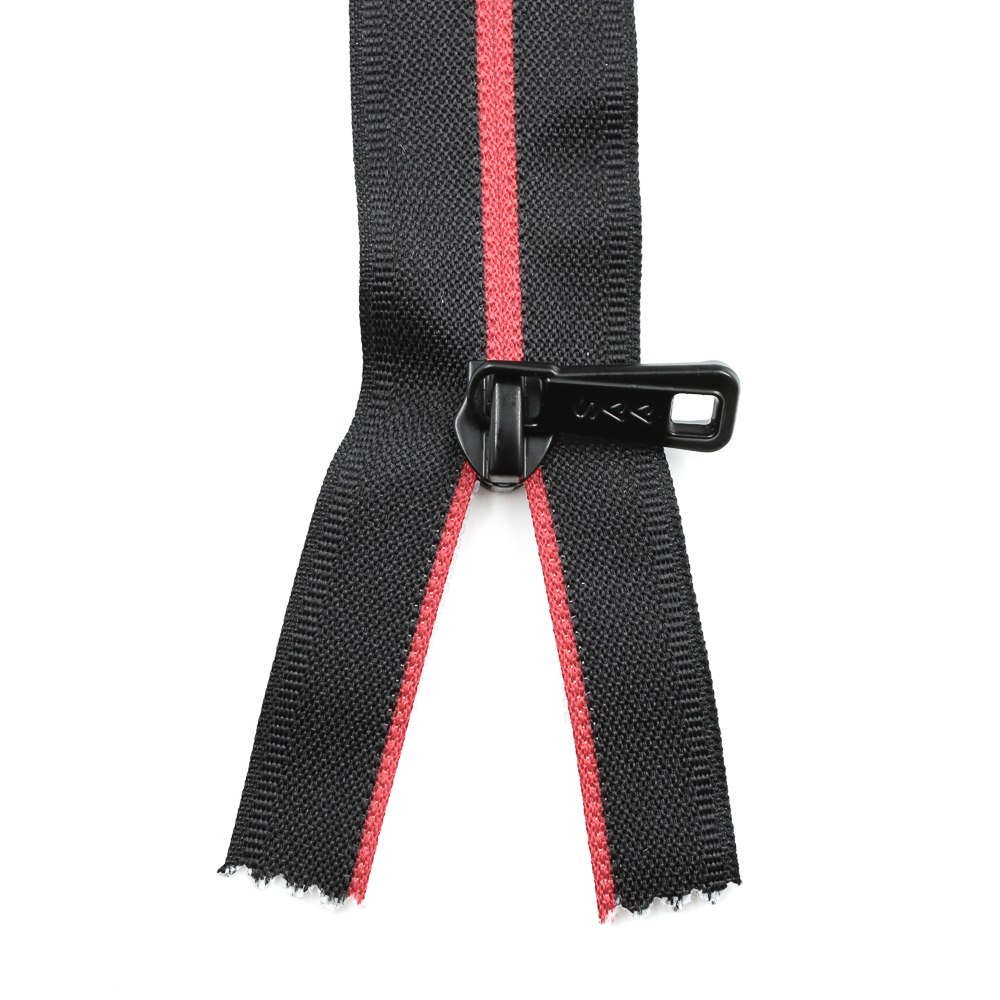
Physical strength dictates fastener lifespan directly. Industry standards like ASTM D2061 establish rigorous baseline metrics. You must test these components under extreme mechanical stress. This guarantees they survive unpredictable consumer usage. Evaluating structural limits prevents field failures.
Lateral load testing measures crosswise strength capacity. Technicians apply perpendicular force to interlocked teeth. They clamp the fabric tape securely on both sides. A machine pulls the tape away from the center coil. The test identifies the exact kinetic force required to burst the chain open. It records this breaking point in Newtons.
This outcome provides crucial context for product designers. High crosswise strength prevents catastrophic bursting under pressure. It is strictly necessary for overstuffed backpacks. Tight-fitting garments like corsets also require high lateral load resistance. A weak chain ruins expensive luggage or compression wear instantly. Ensuring high lateral strength protects your most stressed seams.
Reciprocating testing evaluates overall cycle lifespan. A specialized machine drives the slider repeatedly. It opens and closes the chain thousands of times. The machine maintains consistent lateral and longitudinal tension during operation. It simulates the exact pulling angles a consumer uses.
This lifecycle outcome establishes a critical sourcing baseline. It helps you procure a reliable flexible nylon zipper for daily use. Repeated friction degrades internal coil structures gradually. Cycle testing ensures the slider will not derail later. It proves the track resists jamming after months of everyday operation. It validates both the coil memory and the slider's internal metal cast.
Pull-off testing measures absolute detachment force. Technicians measure the kinetic energy required to snap the puller. They attempt to detach it from the main slider body forcefully. Another variation tests the locking mechanism itself. They force the locked slider to slip down the chain under weight. They measure the exact weight required to defeat the internal locking pin.
These outcomes prevent the most common consumer complaints. Customers despise broken pulls on their jackets. They hate sliding zippers on trousers or heavy bags. Passing these pull-off tests ensures lasting structural integrity. Your product remains fully functional under sudden pulls or heavy physical strain. You eliminate the frustration of a stuck or broken puller.
Mechanical strength alone cannot define true quality. Environmental resilience proves equally critical for apparel. Textile components must survive harsh commercial cleaning routines. They must also comply with strict global toxicity regulations. Ignoring chemistry invites severe legal consequences.
Colorfastness testing prevents permanent textile ruin. Technicians evaluate color bleeding during intense industrial washing. They test chemical reactions during professional dry cleaning. They also measure dye transfer caused by dry and wet friction. We call this rubbing colorfastness. Laboratories grade results on a standardized scale from one to five. You should always demand a grade of four or higher.
Tape shrinkage tolerances require close pre-production evaluation. You must verify shrinkage percentages before bulk sewing begins. High washing temperatures warp untreated polyester tapes easily. The tape shrinks while the surrounding garment fabric remains stable. This causes severe garment puckering post-wash. Accurate shrinkage testing eliminates this unsightly wavy defect entirely.
Chemical safety protects consumers and your brand reputation. Procurement teams must outline strict toxicity requirements globally. Fasteners must use lead-free materials to protect children. Sliders must feature nickel-free plating to prevent severe skin allergies. Manufacturers must utilize azo-free dyes exclusively during production.
Global markets mandate strict regulatory compliance laws. North American customs agencies monitor heavy metal content closely. European markets enforce REACH chemical regulations strictly. OEKO-TEX Standard 100 certification provides a globally recognized safety benchmark. Highlighting these certifications proves your deep commitment to human ecology. Without them, your goods face immediate customs rejection at the border. You lose inventory and face massive legal fines.
Testing yields valuable raw data. You must translate these numbers into actionable purchasing contracts. Vague requests invite substandard bulk production. Precise standards create unyielding vendor accountability. Data removes emotional arguments from quality control disputes.
Different applications demand entirely different strength thresholds. You must match gauge sizes to the final product accurately. Lightweight tents function perfectly using a small #3 coil. Standard winter jackets require a reliable #5 gauge. Heavy-duty tactical gear demands a robust #8 or #10 gauge. Larger gauges offer wider tapes and thicker monofilaments.
Matching test thresholds matters just as much. A cosmetic dress fastener needs minimal crosswise strength. A military backpack requires maximum lateral load resistance. Align your requirements with the real-world environment. Do not copy specifications blindly from one product category to another.
Your purchase orders must include highly specific metrics. Never ask for "good quality" components in a contract. Define your nylon zipper specifications using exact numerical values. Include strict clauses detailing minimum performance levels.
For example, explicitly state "must withstand 5,000 reciprocating cycles without failure." Demand a "minimum crosswise strength of 400 Newtons." Attach acceptable shrinkage percentages directly to the contract appendix. These metrics give your QC team undeniable audit criteria. If a batch fails, the contract dictates automatic replacement.
Creating specifications carries unique implementation risks. Avoid over-specifying your requirements unnecessarily. Demanding tactical-grade strength for a disposable pouch wastes vital capital. It needlessly increases your unit costs and slows production. It forces suppliers to use excessively heavy materials.
Conversely, under-specifying invites rapid quality fade over time. Suppliers might substitute cheaper materials in subsequent production batches. Finding the optimal balance protects your seasonal budget. It ensures consistent product reliability without destroying your profit margins.
| Gauge Size | Typical Application | Minimum Crosswise Strength | Recommended Reciprocating Cycles |
|---|---|---|---|
| #3 | Lightweight apparel, pillows | 250 Newtons | 3,000 Cycles |
| #5 | Standard jackets, daypacks | 400 Newtons | 4,000 Cycles |
| #8 | Heavy luggage, boots | 600 Newtons | 5,000 Cycles |
| #10 | Tactical gear, heavy tents | 800+ Newtons | 5,000+ Cycles |
Your specifications hold no value without reliable manufacturing partners. You must audit factory operations rigorously. Objective evaluation separates premium partners from risky, low-tier vendors. You need partners who understand rigorous quality control deeply.
You must evaluate how deeply a factory tests its daily production. Differentiate carefully between basic and advanced suppliers. Some vendors only test final assembled products. This reactive approach creates high defect rates late in production. It delays shipments constantly.
Premium vendors test raw materials first proactively. They inspect monofilament strength before extrusion begins. They test yarn tensile strength prior to fabric weaving. They verify dye stability before coloring the raw tape. Upstream quality control always produces superior downstream results. It catches flaws before they become expensive finished goods.
Buyers should demand complete data transparency from their partners. Ask for internal batch testing logs routinely. These logs prove the factory maintains daily quality standards consistently. Internal checks prevent slow degradation across massive bulk runs.
You must also demand recent third-party laboratory reports. Internal logs show daily effort and factory discipline. Independent SGS or Intertek reports provide unbiased external validation. A reputable vendor shares both documents willingly. Secretive vendors usually hide substandard manufacturing practices.
Evaluating vendors during the RFQ phase requires a systematic approach. Follow this strict checklist to qualify a potential nylon zipper supplier effectively:
Vendors who meet these strict criteria minimize your supply chain risks significantly. They operate as strategic partners rather than mere order takers.
Sourcing garment components is fundamentally a risk-management exercise. Relying on visual inspection guarantees eventual product failure. Implementing standardized empirical testing acts as your only objective shield. Real quality depends on measurable mechanical strength, environmental resilience, and chemical safety.
Take immediate action to secure your supply chain. Audit your current tech packs today. Update your testing requirements using specific metric thresholds like Newtons and cycles. Finally, request comprehensive QC data from your prospective manufacturing partners. Demanding data ensures your products deliver the lasting reliability your customers expect.
A: Manual feel provides only a subjective guess. You test smoothness objectively using operating force tests. Specialized equipment measures the exact kinetic friction required to move the slider. It records this resistance in Newtons. Lower, consistent Newton readings across the entire chain length prove true mechanical smoothness. This data guarantees consistent performance.
A: They face entirely different material stresses. Nylon testing prioritizes coil memory, flexibility, and polyester tape integrity under lateral tension. Metal testing focuses heavily on individual tooth displacement. It measures the risk of metal teeth pulling away from the tape. Metal tests also evaluate oxidation and rust resistance under salt spray.
A: Factory tests happen in isolated environments. Post-assembly failures often stem from improper sewing practices. Workers might sew the fabric too close to the coil, causing slider jams. Furthermore, intense garment treatments cause late-stage failures. Acid washes or high-heat pressing can warp the plastic coil after the zipper passes initial QC.
A: You should require updated third-party reports annually. Independent labs like SGS should verify chemical compliance and baseline strength yearly. However, you must mandate internal batch test data for every bulk shipment. Daily production varies. Batch-specific logs prove the supplier maintained your required tolerances during your specific production run.


