
Views: 0 Author: Site Editor Publish Time: 2026-08-21 Origin: Site


Incorrect hardware selection carries massive financial risks for large-scale garment manufacturing. Unexpected hardware oxidation ruins expensive garments completely. Finish chipping during harsh industrial washes causes severe production delays. Reputational damage often follows these easily preventable errors. Selecting a metal zipper requires much more than simply matching fabric colors. You must carefully align the chemical properties of the hardware. The mechanical strength of the finish must survive the garment's entire lifecycle. You must also satisfy strict regulatory compliance requirements across different regions.
Our goal is to provide a highly systematic framework. We will guide you through evaluating and specifying hardware accurately. You will learn to order metal finishes for bulk production safely. You can achieve this without compromising garment durability or profit margins. Procurement teams and designers must work together seamlessly. This guide bridges the gap between creative vision and industrial reality.
Vague specifications lead to devastating batch inconsistencies. Finishes often vary drastically across a single production run. You might approve a beautiful matte black sample initially. Then the bulk order arrives with a glossy, uneven sheen. This visual mismatch disrupts entire seasonal collections. Factories often substitute cheaper alloys when specifications remain unclear. They prioritize speed over long-term performance. You must close these loopholes immediately.
Chemical reactions create severe performance failures. Fabric dyes often contain acidic residuals. These residual chemicals attack improper metal finishes aggressively. Leaving a raw brass zipper on light-colored fabric invites disaster. The metal oxidizes rapidly over time. It leaves permanent green stains on the surrounding textile. Moisture in the air accelerates this destructive process. Consumers discover these flaws after a few weeks of wear.
Hardware failure directly drives garment returns. It causes massive delays during quality control inspections. Customers rarely forgive a broken or unsightly zipper. They demand a durable clothing zipper on every purchased item. Fixing these issues post-production costs ten times more than preventing them. Brands lose profit margins when repairing damaged stock. You must treat hardware specifications as rigorously as fabric specifications.
Different garments demand entirely different metal profiles. You cannot use the same zipper on heavy denim and lightweight silk. We must map finishes strictly to their optimal applications. This ensures both visual appeal and structural integrity.
Brass and antique finishes dominate the denim and workwear sectors. They offer incredibly high tensile strength. They handle the immense stress of heavy fabrics easily. These finishes naturally oxidize over time. This gentle oxidation creates a highly desirable vintage look. They remain the best choice for heavy-duty applications. They resist harsh industrial enzyme washes effectively. The base metal rarely degrades under intense physical friction.
Gunmetal and black oxidized finishes suit outerwear and leather goods perfectly. They provide a sleek, low-profile aesthetic. Manufacturers achieve this via complex chemical darkening processes. However, a significant risk factor exists here. They are highly prone to scratching. If the electroplating is too thin, the bright core shows through. You must require clear-coat sealing. This protective layer locks the dark finish in place.
Aluminum and light alloys work exceptionally well for mid-weight apparel. They are incredibly lightweight. They resist rust naturally without heavy chemical treatments. They also boast a significantly lower cost. However, they possess lower structural integrity compared to solid brass. You must not use them for high-tension stress points. Heavy bags or tight jeans will break aluminum teeth quickly.
Polished and luxury electroplating targets the high-end fashion market. These include high-gloss finishes like gold, rose gold, and bright silver. They utilize advanced, multi-stage electroplating techniques. A strict requirement applies here constantly. You must enforce rigorous friction testing protocols. This ensures the plating does not chip away during standard consumer laundering. Luxury clients demand flawless hardware across years of wear.
The chart below outlines these key distinctions for quick reference during design reviews.
| Finish Type | Primary Garment Use | Tensile Strength | Corrosion Resistance | Cost Level |
|---|---|---|---|---|
| Antique Brass | Denim, Workwear | High | Excellent | Medium |
| Gunmetal | Outerwear, Leather | Medium-High | Good (requires sealant) | High |
| Aluminum | Mid-Weight Apparel | Low | Excellent | Low |
| Luxury Electroplating | High-End Fashion | Medium | Moderate (friction sensitive) | Premium |
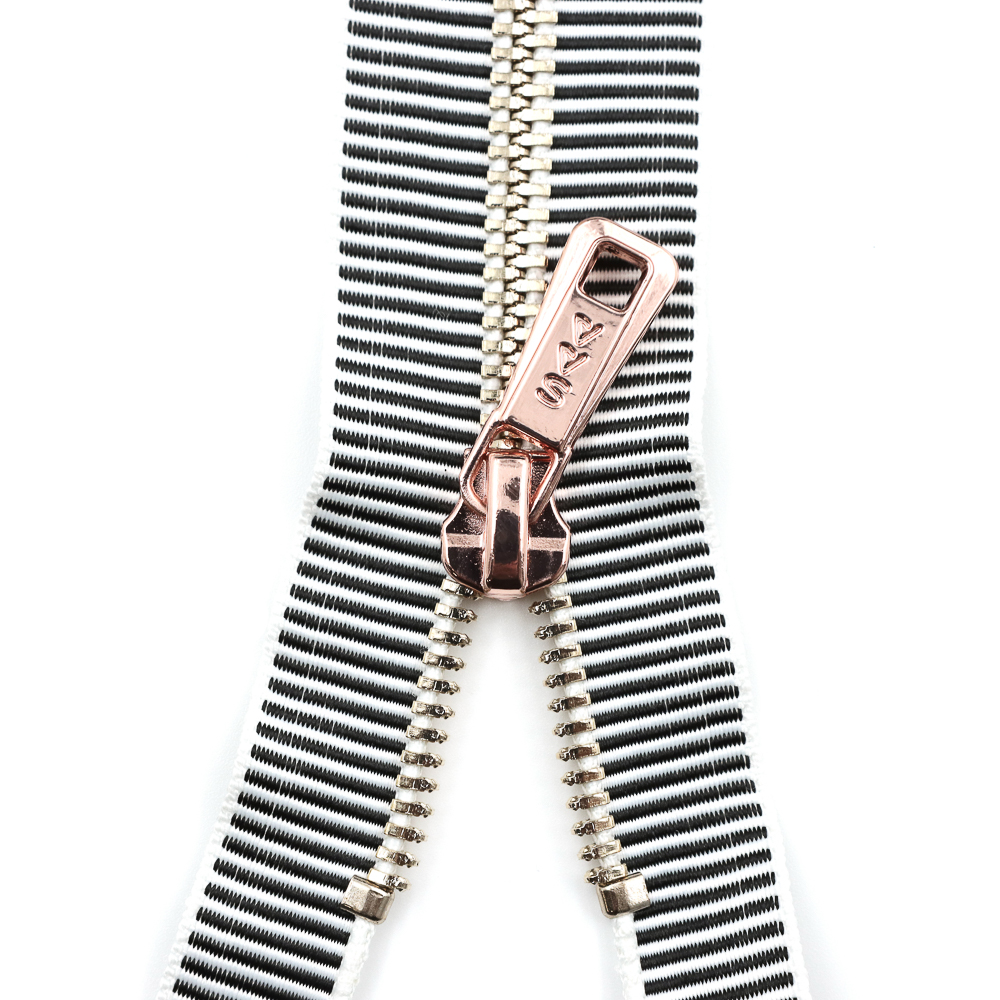
You must rely on objective laboratory testing data. Do not trust visual inspections alone. Appearance hides many underlying structural flaws. A rigorous evaluation framework protects your entire bulk order.
Corrosion and wash testing form your first line of defense. You must detail the necessity of standard environmental tests. Always request ASTM or ISO standard salt-spray test results. Demand these certified reports directly from your garment zipper supplier. This protocol exposes hardware to continuous salt fog. It proves the metal can survive prolonged environmental exposure. Reject any batch showing red rust before the required hour mark.
Laundering compatibility requires equal engineering attention. Evaluate how the finish interacts with specific garment treatments. Stone washing creates immense physical friction. Pumice stones literally beat the metal repeatedly. Bleaching introduces harsh chemical stripping agents. Chlorine ruins unprotected plating instantly. Garment-dyeing processes soak the metal in prolonged, heated chemical baths. The finish must endure these exact manufacturing conditions without degrading.
Global compliance standards remain completely non-negotiable. You must specify strict requirements for heavy-metal limits. Keep lead and cadmium levels well below legal thresholds. Emphasize strict adherence to "Nickel-Free" standards constantly. Follow EU REACH regulations closely to enter European markets. This prevents severe consumer skin allergies. Always mention Oeko-Tex Standard 100 certification. Require this documentation for both textiles and hardware components.
A strong specification sheet eliminates costly overseas miscommunications. You must break down the anatomy of a technical document. Standardize your language immediately. Ambiguity destroys quality control efforts.
Crucial specification components include several technical categories. Follow these parameters carefully:
You must also define strict tolerance levels clearly. Determine the acceptable variance in finish color. A five percent variance in tape shade might pass inspection. A one percent variance in metal gloss might trigger a rejection. Set boundaries for tape width variations. Enforce these specific limits strictly across all bulk batches.
Scaling to bulk production introduces several operational hurdles. You must manage these risks proactively. Factories operate differently during sample making versus bulk manufacturing.
Minimum Order Quantities (MOQs) and lead times will increase significantly. Specialized plating processes take considerable time. Electroplating vats require minimum volume capacities to operate efficiently. A unique custom metal zipper finish often requires a much higher MOQ. Suppliers outsource specific finishes to specialized facilities. Plan your production calendar to accommodate these extended timelines.
The sampling phase remains absolutely critical. Establish a strict, non-negotiable procurement rule. Always order physical sample cards first. Review them under multiple lighting conditions. Then, demand a short pilot run. Sew these zippers into prototype garments. Perform extreme physical wash testing on this pilot batch. Do this long before authorizing any bulk production runs.
Batch consistency requires rigorous quality control systems. Advise your team to implement Acceptable Quality Limit (AQL) inspections. Conduct these intensive checks prior to shipment. Inspectors evaluate a mathematical random sample from the bulk order. If defects exceed the agreed limit, they reject the entire batch. This methodology ensures the finish remains uniform. It protects your brand reputation across thousands of identical units.
Specifying a zipper finish is an engineering decision. It is never just a simple design choice. Your hardware must survive chemical washes, physical friction, and years of consumer use. Proper specification prevents costly production delays and damaging customer returns.
Procurement teams and designers should take immediate action based on these principles. Audit your current hardware specification sheets today. Remove all vague terminology. Request updated compliance certificates from your current suppliers immediately. Order physical finish rings and sample cards for your next seasonal line. Enforce strict testing protocols before authorizing any new bulk order.
A: Aluminum offers excellent natural rust resistance. Specialized coated brass also performs incredibly well. For salt-water environments, you must use marine-grade finishes. Add clear-coat sealants over the electroplating to block moisture completely. This stops oxidation before it starts.
A: You must implement physical master sample sign-offs. Define strict color variance tolerances in your initial manufacturing contract. Hire third-party QC inspectors to verify the bulk batch before it leaves the factory floor.
A: Most standard finishes cannot withstand harsh industrial dyeing. The intense chemicals easily strip standard electroplating. We strongly recommend post-dye hardware attachment. If you must pre-attach, use specific chemical-resistant protective coatings.
A: "Nickel-free" does not mean zero nickel content. It defines a strict regulatory threshold. Under EU REACH directives, the nickel release rate must fall below 0.5 micrograms per square centimeter per week. This specific limit prevents allergic contact dermatitis.


