
Views: 0 Author: Site Editor Publish Time: 2026-09-10 Origin: Site


Approving a flawless, hand-picked sample often feels like a major procurement victory. However, many buyers face a harsh reality shortly after their initial approval. They receive a mass-produced bulk order plagued by glaring inconsistencies. You must establish a standardized, objective evaluation protocol to avoid this critical supply chain risk. Systematically comparing samples from multiple manufacturers prevents disastrous production delays.
Evaluating a prototype goes far beyond simple aesthetics. It requires you to stress-test physical properties rigorously. You must also verify strict chemical compliance standards. Furthermore, assessing the manufacturer’s true production capacity remains non-negotiable. In this guide, you will learn how to evaluate physical prototypes objectively. We will cover how to validate dimensional consistency across different batches. You will discover practical ways to test durability under harsh conditions. Ultimately, you will build a robust framework. This structured approach guarantees your bulk deliveries match your approved prototypes perfectly every single time.
Suppliers often create initial prototypes in small, heavily monitored batches. They dedicate significant time to perfecting these limited runs. These "golden samples" rarely reflect the realities of high-speed mass production. Factory workers hand-polish them meticulously. Technicians adjust the molding machines manually to achieve perfect results. You cannot rely on these isolated successes for bulk decisions. High-speed machinery behaves very differently during continuous operation. Bulk extrusion often introduces minute errors. If you approve a hand-crafted piece without scrutiny, you invite disaster on the factory floor.
Component failures trigger severe cascading impacts across your entire operation. Automated attaching machines jam frequently when fed irregular parts. These jams halt entire production lines, wasting expensive labor hours. Damaged garments require highly expensive rework. Furthermore, poorly made fasteners crack during everyday consumer use. This damages your brand reputation permanently. You will face massive sorting costs to separate good units from defective ones. You also lose valuable time negotiating replacements.
What does a winning prototype look like? It demonstrates high reproducibility above all else. It stays within acceptable tolerance limits consistently. It proves highly durable during everyday functional use. Furthermore, it carries certified safety documentation from recognized testing bodies. You need concrete proof of scalable quality, not just a single aesthetically pleasing object.
Physical dimensions demand strict scrutiny before you finalize any contract. You must cross-reference every physical prototype against your formal plastic button specifications. Use highly accurate digital calipers for this crucial step. Measure the exact thickness carefully. Verify the precise hole size. Check the overall outer diameter. Tolerance variations cause catastrophic failures during garment assembly. Automated button-sewing machines require virtually identical pieces to run smoothly. A difference of half a millimeter will jam the equipment completely.
Visual consistency requires scientific tools rather than just the naked eye. Follow these visual inspection best practices:
You must attach the product to real fabric to test viability. Test its performance as a sewing button 2 versatile fastening directly on your garments. Apply it to varying fabric weights. Use it on different garment styles. Evaluate the ease of buttoning and unbuttoning repeatedly. Stress the structural integrity of the buttonholes and shanks. Apply firm tension to see how it holds. It must remain securely fastened without tearing the underlying fabric.
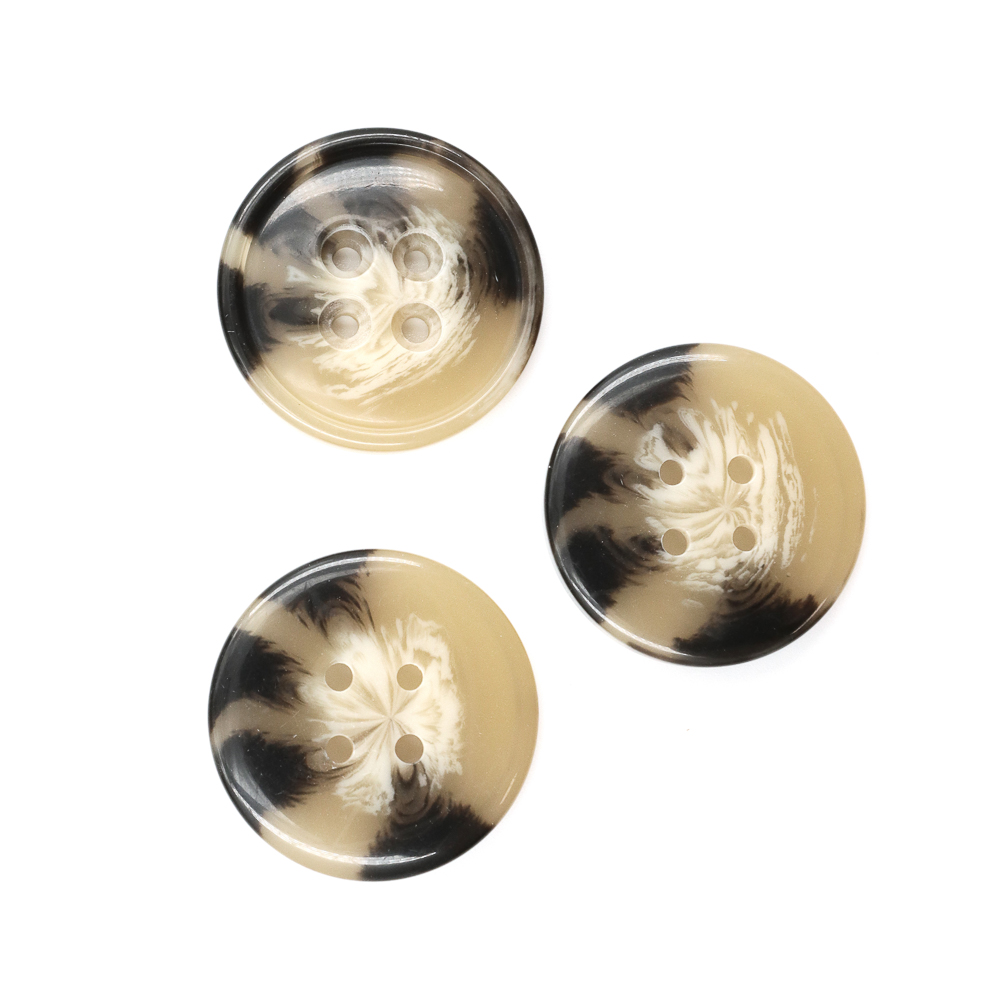
Fasteners endure harsh treatment over their standard lifecycle. You must subject prototypes to aggressive industrial washing cycles. Run them through commercial dry cleaning chemicals. Apply high-temperature ironing directly to the polymer surface. Check closely for warping, melting, or surface cracking. A plastic button must survive these standard consumer care practices without degradation.
Structural failure ruins expensive garments instantly. Conduct formal pull tests immediately upon receiving prototypes. Standardized pull testing ensures the fastener will not shatter unexpectedly. It must survive everyday stretching. It also must endure the heavy pressure exerted during the garment manufacturing process. Drop heavy weights on them to test baseline impact resistance. If they shatter easily, reject the vendor immediately.
Colors must remain locked inside the polymer permanently. Test whether the dye bleeds onto surrounding fabrics. Expose the prototypes to moisture, artificial sweat, and intense friction. Color bleeding ruins lighter fabrics instantly.
| Testing Category | Methodology | Passing Criteria |
|---|---|---|
| Wash Simulation | 50 cycles of industrial washing at 60°C | No warping, fading, or surface cracking |
| Tensile Strength | Automated pull testing up to 90 Newtons | Shank and holes remain completely intact |
| Chemical Resistance | Immersion in standard dry-cleaning solvents | No melting or loss of structural integrity |
| Colorfastness | Friction rub test (wet and dry) | Zero dye migration to surrounding test fabrics |
Base materials behave differently at massive scale. You must differentiate how Resin, ABS, and Nylon perform. A sample phase often uses slow, careful curing. Bulk extrusion speeds up this process dramatically. Resin might look beautifully glassy in a prototype but turn brittle in bulk. ABS offers high impact resistance for heavy outerwear. Nylon withstands intense heat during industrial laundering. You must align the chosen base material with your specific performance expectations.
Global markets enforce strict safety regulations regarding garment components. You must verify all compliance documentation rigorously. Ensure prototypes meet REACH standards in Europe. Check for valid Oeko-Tex Standard 100 certification. Confirm strict CPSIA adherence for the US market. Missing these certifications blocks your global distribution entirely. Customs agencies will seize non-compliant shipments at the border.
You cannot compromise on chemical safety testing. Ensure the absolute absence of restricted substances. Test for dangerous phthalates. Screen the polymers for heavy metals like lead and cadmium. Check for excessive formaldehyde levels. These toxic chemicals trigger massive product recalls. They also invite severe legal penalties from regulatory bodies.
A beautiful prototype means nothing if delivery takes too long. Evaluate the manufacturer realistically. Can they replicate this specific quality within acceptable mass-production timeframes? High-speed runs often sacrifice strict quality for rapid output. Ask them about their daily production volume. Ensure they have the machinery required to handle your order size smoothly.
You must protect your purchase order from bait-and-switch tactics. Mandate a Pre-Production (PP) sample run. Do this before finalizing any purchase order. The factory must produce this PP run on the actual bulk production line. This removes the "golden sample" illusion completely. It proves they can manufacture the item at scale.
Question every plastic button supplier thoroughly regarding their internal controls. Use the following structured approach to evaluate their frameworks:
You need a manufacturing partner perfectly aligned with your strict defect tolerance.
Do not rely on gut feelings when choosing vendors. Build a comprehensive weighted scoring framework. Assign specific numerical weights to different evaluation categories. Factor in the unit cost appropriately. Weigh the physical test results heavily. Factor in compliance certifications as a pass/fail metric. Finally, evaluate their communication speed. Vendors who communicate poorly often signal future production delays.
You need a solid legal benchmark for final delivery. Follow a strict protocol for the approved master prototype. Sign the physical piece directly. Date it clearly with a permanent marker. Seal it inside a tamper-evident bag. This sealed package serves as your baseline against the bulk delivery. If the bulk differs from this sealed unit, you have grounds for rejection.
Transition from prototype approval to contracting carefully. Negotiate the bulk order terms clearly in writing. Define your defect resolution terms upfront. Specify exactly what happens if the bulk fails the final AQL inspection. Hold vendors financially accountable for sudden quality drops.
| Evaluation Metric | Weight (%) | Key Considerations |
|---|---|---|
| Dimensional Consistency | 30% | Adherence to strict technical tolerances and caliper measurements. |
| Physical Durability | 25% | Performance during pull testing, washing, and ironing cycles. |
| Compliance & Safety | 20% | Valid Oeko-Tex, REACH, and CPSIA certifications. |
| Supplier AQL & Capacity | 15% | Realistic lead times and transparent defect resolution policies. |
| Unit Pricing | 10% | Cost scalability without sacrificing structural integrity. |
Rigorous prototype comparison serves as a powerful protective investment. It is never a mere procurement delay. By implementing strict physical testing, you prevent catastrophic factory line jams. You also protect your brand from costly consumer returns. The best decision aligns physical quality with supplier transparency. It also ensures seamless bulk scalability. Finalize your weighted evaluation matrix today. Demand true Pre-Production runs from your top-shortlisted vendors immediately to secure your supply chain.
A: A prototype is often hand-crafted or produced on slow, heavily monitored machinery to showcase design intent. A Pre-Production (PP) sample is manufactured directly on the high-speed mass-production line. The PP sample proves the factory can replicate the prototype's quality at scale.
A: Request at least 50 to 100 pieces for thorough evaluation. You need enough units to conduct destructive testing, wash simulations, and dimensional consistency checks. A larger quantity also highlights potential variance issues between individual pieces.
A: Most reputable suppliers follow an Acceptable Quality Limit (AQL) of 2.5 for major defects and 4.0 for minor defects. Always negotiate these exact tolerances in your contract before placing the order to ensure accountability.
A: Submerge the pieces in standard dry-cleaning solvents, like perchloroethylene, for several hours. Afterward, inspect them for melting, stickiness, color fading, or structural weakness. Professional third-party testing labs can also simulate this process accurately.
A: Always request chemical compliance certificates, such as REACH or Oeko-Tex Standard 100. Additionally, ask for material specification sheets, technical drawings detailing tolerances, and the supplier's formal AQL policy documentation.


