
Views: 0 Author: Site Editor Publish Time: 2026-08-29 Origin: Site


A zipper stands out as the most critical failure point in modern product design. When a closure snaps or jams, the entire garment or gear piece becomes functionally useless. This vulnerability means a failed closure immediately leads to product returns. It triggers warranty claims and causes significant brand damage. Designers and procurement teams must evaluate materials carefully. You need to avoid these costly reputational pitfalls. Molded plastic zippers step in to solve this structural issue. Engineers typically mold them from injected polyacetal (POM) resin. They offer an optimal balance of durability and weather resistance for specific use cases. The goal of this guide is straightforward. We will provide you an evidence-based framework to properly evaluate technical data. You will learn how to mitigate manufacturing risks and source your closures reliably for mass production.
Making a product durable requires selecting the right closure material. Many brands consider the plastic zipper popular and practical fastening solution for extreme environments. It fundamentally changes how textiles connect.
You must understand the injection-molded tooth structure. Manufacturers inject liquid polyacetal resin directly into molds. These molds sit right on the fabric tape. The resin cures and fuses the teeth directly onto the woven tape. This direct fusion provides superior resistance to tooth-pullout. It easily outperforms basic metal crimping. Metal teeth clamp onto the fabric edge. They can slip or detach under stress. Molded plastic teeth become one unified entity alongside the tape. This structural integration handles sudden bursts of tension exceptionally well.
Molded resin outperforms metal and nylon coil in very specific conditions. It remains completely immune to oxidation and rust. This makes it mandatory for saltwater marine applications. Polyacetal (POM) resin also features self-lubricating properties. The slider glides smoother over time. Frequent friction physically polishes the resin teeth. Furthermore, the rigid tooth structure sheds sand, dirt, and heavy debris easily. Nylon coil zippers often trap grit inside their tight loops. Molded plastic simply pushes debris out of the way during operation.
Designers do not have to sacrifice aesthetics for function. Molded plastic allows exact DTM (Direct to Match) color matching. Suppliers dye the resin pellets before the injection phase. The color permeates the entire tooth. Scratches will not reveal a different base metal underneath. You can also request custom tooth profiles. Some brands use metallic-looking resin. Others design distinct tooth shapes for aggressive tactical looks. These visual changes happen without compromising structural integrity.
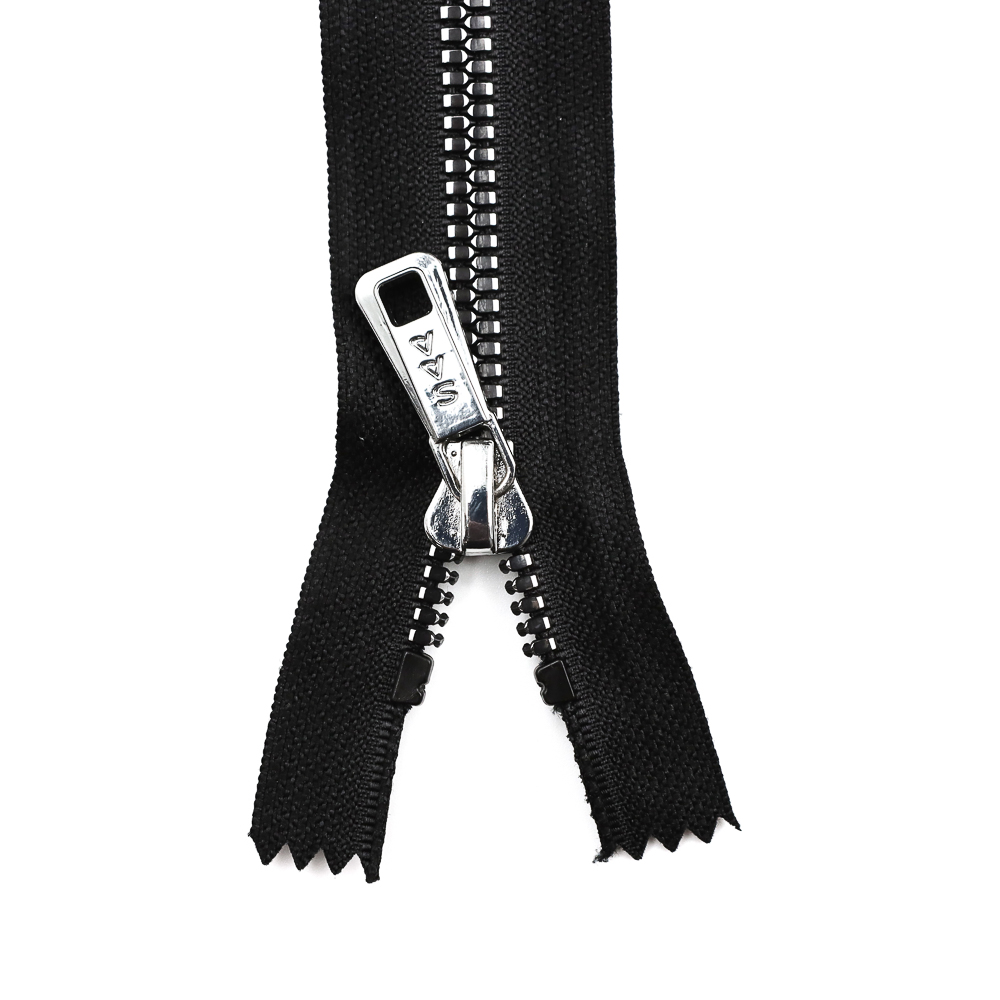
Evaluating raw materials requires technical precision. Understanding your required plastic zipper specifications prevents catastrophic product failures in the field.
Zippers use a standard numbering system to denote tooth width. The number roughly equals the millimeter width of the closed teeth. You must match this gauge directly to your application.
Standard Molded Plastic Zipper Gauge Matrix
| Gauge Size | Lateral Strength Profile | Flexibility Level | Primary Applications |
|---|---|---|---|
| #3 | Low to Moderate | High | Lightweight wearables, interior pockets, small pouches. |
| #5 | Moderate to High | Medium | Standard outerwear jackets, backpacks, sportswear. |
| #8 | High | Low-Medium | Heavy canvas, tactical gear, standard marine covers. |
| #10 | Extreme | Low | Industrial covers, heavy tents, severe-duty marine canvas. |
You cannot use a #3 gauge on a heavy canvas tent. The lateral tension will tear the teeth apart. Conversely, placing a #10 gauge on a lightweight windbreaker ruins the garment drape. The zipper will feel rigid and heavy.
You must define the structural configuration of your closure. Separating zippers allow the two tape halves to detach completely. You see these on jacket fronts. They utilize a pin and box mechanism at the bottom. Closed-end zippers remain connected at the base. You find them on backpacks, tents, and pockets. Two-way separating configurations use two sliders. They allow users to open the garment from the bottom or top. Tents often require two-way closed-end configurations for internal and external access.
Slider choice dictates user safety and daily functionality. Evaluate auto-lock versus non-lock sliders carefully. Auto-lock sliders contain a small internal pin. This pin drops between the teeth when you release the pull tab. It prevents the zipper from opening under lateral pressure. Apparel strictly requires auto-lock sliders to prevent embarrassing wardrobe malfunctions. Non-lock sliders move freely. They have no internal locking pin. You use them for rapid-deploy industrial covers or quick-access bags. Pulling the fabric physically forces a non-lock slider open.
Do not ignore the fabric tape carrying the teeth. Standard polyester tape dominates general apparel. However, outdoor gear demands upgraded materials. You should source UV-treated tape for prolonged sun exposure. Standard polyester degrades quickly under harsh ultraviolet rays. If your product needs weatherproofing, consider polyurethane-coated (PU) tape. The manufacturer applies a PU film over the tape. This creates a highly water-repellent barrier. It keeps rain out of sensitive backpack compartments.
Choosing specifications is only the first step. You must align these choices against real-world environmental threats. Product compliance dictates your long-term success.
Marine environments destroy inferior hardware rapidly. You must evaluate UV degradation curves carefully. Require suppliers to provide comprehensive UV resistance testing data. The POM resin will embrittle if it lacks proper UV inhibitors. The teeth will eventually snap off under pressure. Saltwater corrosion presents another massive threat. The plastic teeth resist salt naturally. However, the metal sliders do not. You must establish saltwater corrosion baselines for the slider alloys. Demand marine-grade enamel coatings or specialized non-corrosive alloys.
Healthcare environments prioritize sanitization above all else. Assess your resin resistance to institutional laundering processes. Industrial hospitals use harsh detergents and extreme temperatures. Chemical sterilization protocols will melt inferior plastics. High-heat autoclave environments demand specialized high-temp resin variants. Always verify the melting point of your chosen polyacetal compound. Standard POM may warp under severe medical cleaning routines.
Consumer apparel requires strict safety compliance. You must discuss OEKO-TEX® Standard 100 certification requirements. This global certification ensures the materials remain free from harmful substances. It guarantees safety for prolonged skin contact. Alongside chemical safety, you must demand cycle-testing data. Daily wear puts immense repetitive strain on the closure. A quality zipper should easily withstand thousands of open-and-close cycles without degrading.
Never accept marketing claims at face value. Emphasize the necessity of evaluating standardized physical metrics. Reputable suppliers test products using ASTM D2061 standard test methods.
Procuring a standard plastic zipper introduces specific manufacturing realities. Designers must bridge the gap between technical specs and sewing floor execution.
You must address the fundamental stiffness trade-off. Molded plastic zippers do not contour as easily as nylon coil variants. Nylon coils bend smoothly around tight corners. Molded plastic relies on rigid, blocky teeth. We strongly warn against using heavy-gauge plastic zippers on lightweight fabrics. If you sew a #8 plastic zipper onto thin nylon, puckering occurs. The rigid tape fights the draped fabric. This tension causes severe wave distortion along the seam. Always match the zipper tape stiffness to your base fabric weight.
Factory production lines face unique hurdles with molded plastic. The rigid teeth present severe needle deflection risks during manufacturing. If a sewing needle strikes a plastic tooth, the needle shatters. This damages the garment and halts the production line. You must enforce the necessity of proper seam allowances. Your tech packs must specify exact distances from the teeth. Furthermore, sewing too close to the teeth guarantees slider catching. The slider will inhale the excess fabric and jam permanently.
Never move straight from a 3D render to mass production. Prototyping reveals hidden flaws in your closure integration. Follow a strict physical testing protocol.
Recommend stress-testing prototypes heavily before approving mass production. Catching a zipper defect early saves thousands of dollars.
Securing a premium product requires vetting your manufacturing partners. Finding a true plastic zipper supplier means looking beyond basic catalogs and unit prices.
You must learn how to look past glossy marketing claims. Every factory claims they have "high quality" control. You need mathematical proof. Ask for statistical process control (SPC) data. This data proves they monitor dimensional variances during injection molding. Also, demand their allowable defect rates. A trustworthy partner openly shares their Acceptable Quality Limit (AQL) standards. If they refuse to provide defect rate data, walk away. Transparency separates reliable partners from risky vendors.
A great prototype means nothing if mass production fails. Evaluate supplier lead times for standard and custom orders. You need to know their MOQ (Minimum Order Quantity) flexibility. Custom sizes or exact DTM colors usually require higher MOQs. Ensure these minimums align with your current production scale. Furthermore, investigate their raw material sourcing stability. Do they buy premium POM resin consistently? Changes in raw resin suppliers often cause batch-to-batch color and strength variations.
Your supplier should not just act as a silent order-taker. A trustworthy supplier acts as a highly knowledgeable consultant. They will review your tech packs critically. An excellent partner will actively refuse orders where the specified zipper gauge is structurally inappropriate for the client's fabric weight. They protect your brand reputation by preventing engineering mistakes. Look for vendors who suggest alternative slider alloys or tape widths to improve your final product design.
Choosing the right molded closure demands rigorous analytical thinking. You must follow a strict final evaluation logic. First, define the exact environmental threat your product will face. Second, calculate the required crosswise tension strength based on fabric weight and user behavior. Third, select the exact gauge, slider, and tape specifications to meet those demands. Finally, test the integrated product rigorously in real-world scenarios. We strongly encourage buyers to request technical data sheets (TDS) early in the design phase. Demand physical testing samples rather than ordering strictly off spec sheets. Touching the physical component reveals stiffness and friction issues immediately. Take these practical steps to secure a reliable, durable closure for your next mass-production run.
A: A plastic molded zipper features individual rigid teeth injected directly onto the tape. It excels in durability and handles corrosive environments well. A nylon coil zipper uses a continuous monofilament plastic coil sewn onto the tape. Coil zippers offer superior lateral flexibility and easily bend around tight corners.
A: No. Standard molded plastic zippers with PU-coated tape are highly water-resistant, not waterproof. They easily repel rain and splashes. However, they are not completely airtight or watertight under submersion. True waterproof applications require specialty airtight zippers with specialized interlocking seals, which standard molded zippers do not possess.
A: Prolonged UV exposure breaks down standard POM resin at a molecular level. This causes resin embrittlement. The teeth lose their impact resistance and snap off easily under tension. You must specify UV inhibitors during the manufacturing process to ensure long-term durability for outdoor gear.
A: Commercial procurement timelines for custom DTM colors typically range from three to six weeks. The factory must formulate the dye, color-match the resin pellets, and run custom injection batches. Always communicate your production schedules early to accommodate these necessary dyeing and prototyping phases.


