
Views: 0 Author: Site Editor Publish Time: 2025-11-19 Origin: Site


From the smooth surface of a fashion blazer to the durable closure on a work uniform, every Plastic Button tells a story of materials, precision, and craftsmanship. Understanding how these buttons are made not only helps buyers make smarter choices but also highlights the quality and value behind each piece. At Ningbo Fengke Garment Accessories Co., Ltd., every button we produce reflects careful material selection, modern molding technology, and strict quality control — ensuring performance, consistency, and appeal that last through countless wears.
The quality of a plastic button begins with its material composition. Choosing the right raw material determines strength, shine, heat resistance, and even the way the button feels to the touch. The most common materials used in button production include polyester resin, ABS, PMMA (acrylic), and urea-formaldehyde — each with distinct benefits that make them suitable for different types of garments.
Polyester resin buttons are widely used because of their hardness, excellent colorability, and resistance to heat and chemicals. They hold dyes beautifully, allowing for vibrant and lasting shades — ideal for decorative apparel or high-end fashion. ABS (Acrylonitrile Butadiene Styrene), on the other hand, offers superior toughness and impact resistance. It’s often used for uniforms, outerwear, or any application requiring long-lasting durability.
PMMA (Acrylic) buttons bring an elegant transparency and glass-like gloss that designers love. Their clarity and color stability make them a top choice for formalwear or fashion accessories. Urea-formaldehyde materials, known for their density and rigidity, remain a staple in classic shirt buttons, balancing affordability with refined appearance.
At Ningbo Fengke Garment Accessories, we source high-quality resins from reliable suppliers and test every batch to ensure consistent flow and color response. This material foundation sets the tone for superior appearance and mechanical strength in the finished product.
The next step in creating a plastic button involves transforming raw resin into precise, uniform shapes. There are three main production techniques used in the industry: injection molding, compression molding, and casting or pressing. Each method brings unique benefits that influence cost, finish, and quality consistency.
Injection molding is one of the most advanced and efficient methods. Heated resin is injected into a steel mold at high pressure, forming buttons with exceptional detail and repeatability. This process allows for intricate shapes, logos, and patterns. Buyers can often identify injection-molded buttons by their smooth backs and minimal seam lines. It’s perfect for large-scale production with high consistency — a technique extensively used at Ningbo Fengke Garment Accessories.
Compression molding involves placing pre-measured resin into a heated mold, then compressing it until the shape forms under heat and pressure. This traditional method is especially common for dense materials like urea-formaldehyde. Buttons made this way are known for their solid structure, slightly matte finish, and classic tactile feel. Because of their strength and form stability, they’re often found on formal shirts and coats.
Casting uses liquid resin poured into open molds, often hand-finished for artistic effects. It’s preferred for smaller batches or designer buttons that need customized shapes or marbled color patterns. The results are visually rich and unique, though this process requires longer curing and finishing time, which affects lead time and cost.
After forming, every button undergoes a series of finishing steps that give it its final look and texture. Polishing smooths surfaces and enhances shine, especially for polyester and acrylic buttons. This may be done through mechanical tumbling or gentle buffing.
Plating imitation is a decorative technique that gives buttons a metallic appearance without the weight of real metal. Through vacuum or electrostatic coating, ABS and resin buttons can resemble brass, nickel, or antique finishes, expanding design possibilities for fashion collections.
Dyeing and coating processes further refine aesthetics. Buttons are dipped in or sprayed with pigments for uniform color coverage. A final protective coating may be applied to prevent fading, scratching, or chemical damage. Every stage contributes not only to appearance but also to functional endurance — ensuring that buttons stay vivid and intact through washing and daily wear.
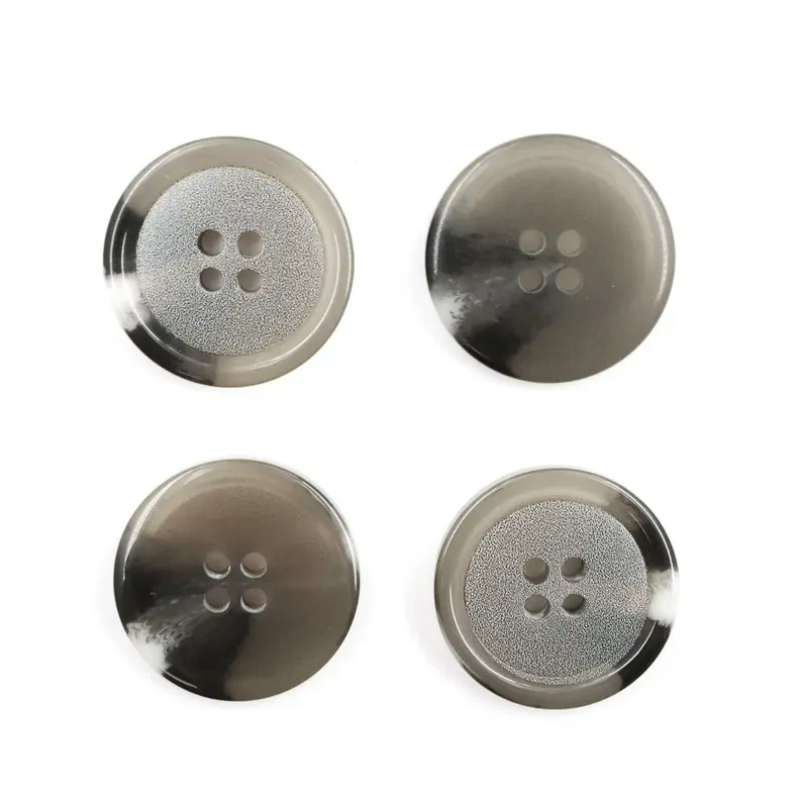
A well-made plastic button is defined not only by its looks but also by how it performs over time. At Ningbo Fengke Garment Accessories Co., Ltd., every production batch is subjected to a comprehensive quality control process designed to ensure dimensional accuracy, strength, and durability.
Dimensional tolerance tests confirm that button sizes match exact specifications, ensuring consistent sewing and garment fit. Colorfastness tests simulate washing, sunlight, and friction to verify that pigments won’t fade or transfer. Load and tensile strength tests check whether buttons can withstand pulling and stress during use, while thermal resistance tests evaluate their stability under heat from ironing or dry cleaning.
Visual inspections follow international standards, ensuring that every piece is free from surface defects, bubbles, or uneven coloring. Buyers are encouraged to request test reports or inspect production samples — a sign of transparency and professionalism that reflects a supplier’s confidence in its craftsmanship. Ningbo Fengke’s quality control system ensures every shipment meets the high expectations of fashion houses, uniform makers, and global apparel brands.
The cost of plastic buttons can vary widely — and understanding why helps buyers align budgets with quality goals. The main cost drivers include material type, tooling complexity, finishing processes, and production scale.
High-grade polyester or transparent acrylic costs more than basic resin due to better color clarity and durability. Tooling — especially custom molds with logos or patterns — adds upfront expense, though it becomes economical for repeated or bulk production.
Finishing also impacts price: metallic coatings, laser engraving, or multi-layer dyeing require extra steps and skilled labor. Small-batch designer buttons often command higher per-unit prices because of the setup and manual craftsmanship involved.
By contrast, mass-produced, simple ABS buttons are fast and cost-efficient to produce. At Ningbo Fengke, we balance these factors with efficient production management and stable sourcing, ensuring competitive pricing without compromising quality.
In today’s fashion industry, sustainability plays a growing role in material choice. While most conventional plastic buttons are durable, their recyclability differs by resin type. Polyester and ABS can often be recycled or re-ground for reuse in industrial applications. Acrylic buttons, due to their clarity, are sometimes repurposed into decorative items or crafts.
Manufacturers are now experimenting with biodegradable resins and plant-based plastics, offering eco-friendlier alternatives. Ningbo Fengke Garment Accessories Co., Ltd. actively explores greener production solutions, including waste reduction and energy-efficient molding systems.
Buyers concerned about sustainability should request material data sheets and certification details to confirm compliance with environmental standards such as REACH or RoHS. Transparency at the sourcing level not only supports responsible manufacturing but also enhances brand reputation among conscious consumers.
Production method and customization level directly influence lead times and minimum order quantities (MOQ). Injection molding, with automated cycles and high-capacity tooling, allows for faster production and consistent delivery — ideal for large-volume orders. Compression molding and casting require more manual steps, leading to slightly longer lead times but offering greater flexibility in material and design.
For stock designs, lead times can be as short as one to two weeks, while fully custom buttons may require additional time for mold development, sampling, and color approval. Ningbo Fengke’s in-house tooling workshop and rapid prototyping system shorten development cycles, helping buyers move from concept to production quickly.
To speed up sampling and ensure smooth procurement, buyers are encouraged to confirm specifications early — size, hole count, finish, and packaging — so production can proceed without delays. Understanding how manufacturing affects delivery and MOQ helps avoid unnecessary waiting and ensures projects stay on schedule.
From raw materials to final inspection, every stage of Plastic Button production influences its performance, cost, and delivery time. By understanding how buttons are made, buyers can better evaluate value, durability, and reliability. At Ningbo Fengke Garment Accessories Co., Ltd., we take pride in combining advanced molding technology, sustainable material choices, and rigorous quality control to deliver products that exceed expectations.
If you’re looking for dependable garment accessories or want to explore new design possibilities with resin buttons, contact us today to request free samples or production specifications. Our team is ready to support your next creation with expertise, flexibility, and trusted craftsmanship.


